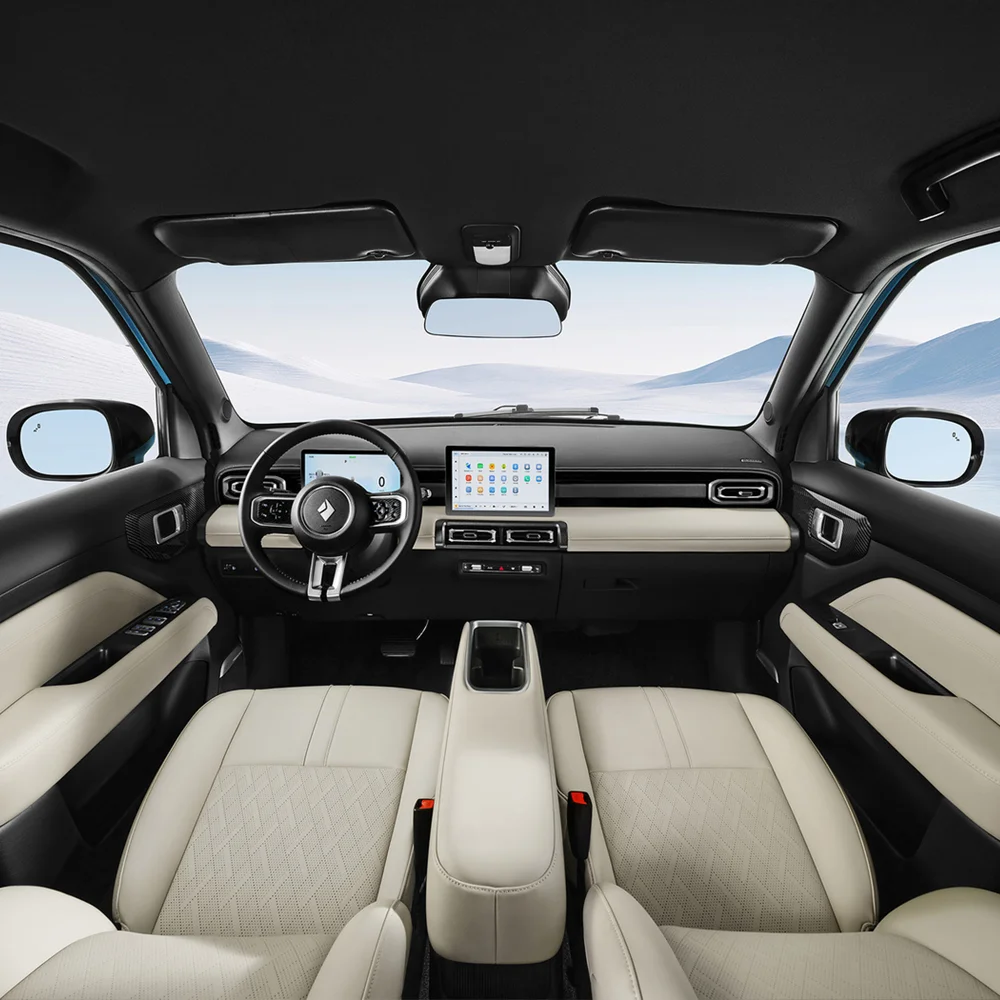
What is a Chinese electric mini truck?
A Chinese electric mini truck is a battery-electric light commercial vehicle — typically under 3.5 tonnes gross vehicle weight — built for cargo transport, urban delivery, or industrial utility work. The category covers a wide range of body configurations: enclosed panel vans, open flatbed trucks, refrigerated cargo units, mini pickups, and municipal utility vehicles. All are produced by Chinese manufacturers for domestic use and, increasingly, export.
For fleet buyers and logistics operators, the relevant market is the commercial segment — not the sub-$2,000 low-speed vehicles that dominate consumer search results. The commercial Chinese electric mini truck market starts at approximately $12,000 FOB and delivers vehicles capable of public-road operation in markets that recognise UN ECE vehicle standards. The BYD T3, JAC iEV series, and DFAC EC31 are examples of this category.
Demand is rising. China's new energy commercial vehicle sector grew by more than 30% year-on-year in 2024, driven by urban emission zone regulations, fuel-cost pressure on fleet operators, and aggressive government procurement targets. Export volumes are following the same trajectory, particularly into Southeast Asia, the Middle East, and Europe.
For dealers adding an electric commercial line, logistics operators evaluating fleet replacement, or government procurement teams running a tender, the practical questions are consistent: which models are export-ready, what do they land at in your market, and what do you need to confirm before committing to an order? This guide answers all three.
Commercial electric mini truck vs. low-speed NEV: the distinction that matters
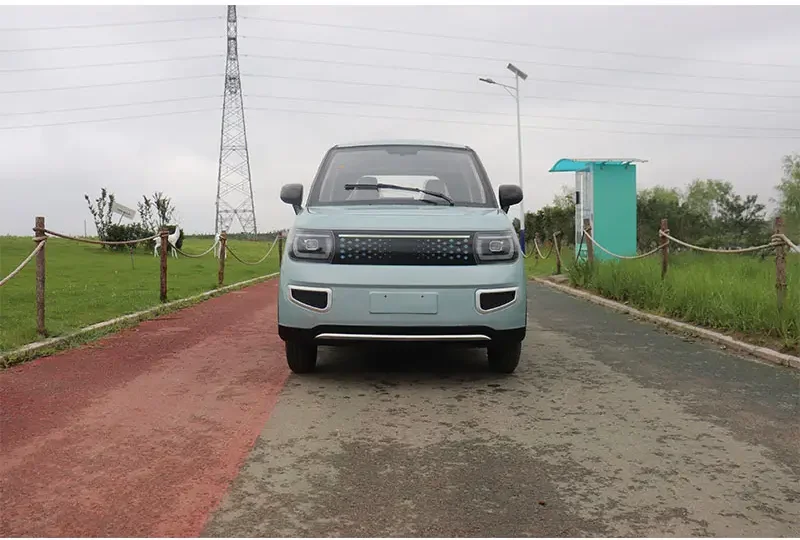
Most English-language coverage of "Chinese electric mini trucks" is about one specific product type: the ChangLi-style NEV available on Alibaba for $800–$2,000. These are low-speed neighbourhood electric vehicles. They have 3–6 kW motors, 60V lead-acid or small LFP battery packs, top speeds of 25–40 km/h, and they are not type-approved for public road use in any major regulated market. They are useful tools — for farm maintenance, warehouse yard work, private estates, and similar off-road applications — but they are not commercial logistics assets.
The commercial Chinese electric mini truck is a fundamentally different product.

Commercial electric delivery fleets are now a standard part of urban logistics operations in markets from the UK to Thailand.
What separates commercial models from NEVs:
- Motor power: 30–100 kW (vs. 3–6 kW for NEVs)
- Battery capacity: 20–80 kWh LFP, DC fast-charge capable (vs. 3–10 kWh slow-charge only)
- Top speed: 80–120 km/h (vs. 25–40 km/h)
- Payload: 500–1,500 kg (vs. 200–400 kg)
- Type approval: UN ECE R10, R48, and related standards required for public road use
- FOB price: $12,000–$30,000+ (vs. $800–$3,000)
For a dealer or fleet buyer, this distinction is not academic — it is a registration and compliance issue. An import that cannot be registered for on-road use in your market is not a fleet asset; it is a liability on your lot. Confirm the type approval status of any model before ordering, not the manufacturer's general claim about road legality.
The NEV coverage creates a perception gap that affects commercial importers directly. Dealers who arrive at a sourcing conversation having read about $1,000 Alibaba trucks need to be repositioned to a completely different product category before any meaningful specification discussion is possible. In our experience, the first enquiry from a new distributor takes 2–3 exchanges to establish which segment they actually need. Build that context into your inbound sales process — a short "commercial vs. NEV" explainer page or PDF reduces that friction to a single touch. The time saved per lead justifies the content investment by the fifth converted inquiry.
Top Chinese electric mini truck models for fleet buyers in 2026
Five models with active export programs, confirmed type approval in at least one major market, and a track record of actual delivered units — not just announced targets.
| Model | Body type | Battery | CLTC range | Payload | FOB estimate | RHD |
|---|---|---|---|---|---|---|
| BYD T3 | Panel van / flatbed | 38.4 kWh LFP | ~200 km | 700 kg | $18,000–$25,000 | Yes |
| JAC iEV6T | Enclosed cargo / flatbed | 60 kWh LFP | ~250 km | 1,000 kg | $20,000–$28,000 | Limited |
| DFAC EC31 | Mini cargo truck | 30 kWh LFP | ~150 km | 850 kg | $15,000–$20,000 | No |
| Foton Aumark iBlue | Light logistics van | 50 kWh LFP | ~220 km | 1,200 kg | $22,000–$30,000 | No |
| Kaiyun Pickman | Mini pickup / flatbed | 20.4 kWh LFP | ~200 km | 500 kg | $12,000–$16,000 | No |
FOB figures are indicative for B2B order volumes (10+ units). Single-unit and spot-order pricing is higher. Confirm current production pricing and lead times directly — factory schedules and pricing shift quarterly.
BYD T3 — the deployment benchmark
The T3 is the most widely deployed Chinese electric mini truck outside China. It has been used by DHL, JD.com, and SF Express across China's major cities, and it has active deployments in the UK (through BYD's distribution network), the Netherlands, Thailand, and Singapore. The RHD variant is confirmed for UK and selected Southeast Asian markets. For fleet buyers who need a model with proven export infrastructure — parts availability, trained service technicians, and OTA update capability — the T3 is the lowest-risk starting point. FOB pricing of $18,000–$25,000 delivers a landed cost competitive with anything in its class from a Korean or European manufacturer.
JAC iEV6T — the payload case
Where payload matters more than brand recognition, the JAC iEV6T's 1,000 kg rating and 60 kWh battery give it a useful advantage over the T3. JAC has a longer history of commercial vehicle exports than BYD in some markets, particularly in Latin America and the Middle East. The trade-off: RHD availability is limited to specific project orders and requires extended lead times. For LHD markets, the iEV6T is a strong candidate for medium-payload urban delivery routes.
Kaiyun Pickman — the entry-tier access point
At $12,000–$16,000 FOB, the Pickman is the lowest-barrier entry into the commercial Chinese electric mini truck segment. It is compact, open-bed, and well-suited to agricultural markets, smallholder logistics, and short-range utility applications. Range is sufficient for most rural use cases. The limitation: no RHD, limited formal type approval in most Western markets. For buyers in Southeast Asia, Africa, or markets with less stringent import standards, it represents accessible fleet electrification at a price that makes route economics work from day one.

Chinese manufacturers produce electric mini trucks at scale — the production volumes that make competitive FOB pricing possible.
Key specs to verify before placing an order
The specification sheet a manufacturer sends is optimised for the domestic Chinese market. The figures that matter for your import decision are different — and often absent from standard documentation.
Payload vs. load volume. For urban delivery buyers, gross payload (kg) and internal load volume (m³) are the two figures that determine route economics. A van with 700 kg payload and 4.5 m³ load volume serves different route profiles than one with 1,000 kg payload and 6 m³. Request both figures for the specific body configuration and trim level you intend to import — not the headline number from a multi-variant brochure.
CLTC vs. real-world range under load. CLTC is the Chinese test cycle. For commercial vehicles under typical payload, real-world range runs 65–75% of the CLTC figure — roughly 100–180 km depending on model, load weight, ambient temperature, and driving pattern. For urban last-mile delivery route planning, use 65% of the manufacturer's CLTC figure as your conservative working range. A model rated at 200 km CLTC delivers approximately 130 km of reliable working range per charge under standard load.
Charging connector standard. Most Chinese commercial EVs use the GB/T connector standard. In markets that use CCS2 (Europe, Australia) or CHAdeMO (Japan, some Southeast Asian deployments), confirm: does the export variant ship with a CCS2 port, or is an adapter available and certified? A GB/T-to-CCS2 adapter resolves AC slow-charging compatibility but DC fast-charging access depends on network compatibility. Confirm the specific connector on the export-spec vehicle — not the domestic spec.
Cold-chain body certification. For refrigerated body configurations, ATP certification (Agreement on the International Carriage of Perishable Foodstuffs) is required for commercial food transport in EU countries. Confirm whether the refrigerated body fitted to the vehicle holds ATP certification for your destination market. This is a separate certification from the vehicle type approval and is often not included in a standard export quote.
Warranty structure outside China. Standard warranty on Chinese electric commercial vehicles is typically 8 years or 500,000 km on the battery pack, with 3 years on the vehicle. Confirm: is the warranty honoured through a registered entity in your market, or does it require return to a Chinese facility for validation? For fleet buyers with a large number of units, an unclear warranty pathway creates a material operational risk.
OTA update capability and telematics. Fleet management depends on remote monitoring and over-the-air software updates. Confirm that the export variant supports your market's mobile data standards (4G LTE bands), and that the telematics platform has an API accessible to your fleet management system. Some domestic Chinese platforms do not support third-party API access without a specific commercial agreement.
Last-mile delivery vs. utility: matching the vehicle to the task
Urban last-mile delivery
The strongest use case for a commercial Chinese electric mini truck is urban last-mile delivery. Enclosed van configurations — BYD T3, Foton Aumark iBlue — cover a full shift on a single charge for most urban route structures. Compact dimensions (under 2m width on the T3) allow access to residential streets, loading bays, and multi-storey car parks that a full-size van cannot navigate. Overnight depot charging eliminates the need for en-route fast-charging infrastructure.
Target buyer: logistics operators, courier and parcel delivery companies, e-commerce fulfilment operators, food and grocery delivery businesses, urban distribution centres.
Key spec to prioritise: load volume and payload over raw range. Most urban delivery routes are under 120 km per shift — range is rarely the constraint. Load capacity determines how many drops per route, which is the variable that drives revenue per vehicle.
Agricultural and rural utility
Open flatbed and mini pickup configurations serve agricultural transport, plantation logistics, and market supply chains in Southeast Asia, Africa, and Latin America. The Kaiyun Pickman's compact footprint and 200 km CLTC range suit smallholder operations where charging is from a domestic supply overnight. Payload requirements in this segment are moderate — 500 kg covers most agricultural cargo loads at this scale.
Target buyer: agricultural supply dealers, cooperative farming operations, rural electrification projects, plantation operators replacing diesel utility vehicles.
Municipal and industrial fleet
Street cleaning, refuse collection, utility maintenance, and port logistics are growing procurement categories for Chinese electric mini trucks. Several manufacturers — including DFAC and Foton — produce purpose-built municipal configurations on standard chassis. These are typically procured through government tender processes; the procurement pathway and regulatory approval process differ from standard commercial vehicle imports. For importers targeting government fleet business, confirm the applicable public procurement standards in your destination market before approaching manufacturers.
Source your electric mini truck fleet today
Tell us your destination market, required body configuration, payload needs, and target quantity. We will confirm current factory availability, export-spec documentation, and landed cost for your specific market. Response within one business day.
Import considerations: duty, homologation, and lead times

Getting the landed-cost calculation right before you order separates a profitable import from an expensive first lesson.
Customs duty rates by market
Duty rates on electric commercial vehicles are calculated differently from passenger EVs — and the distinction matters for your landed cost.
| Market | Standard rate | Notes |
|---|---|---|
| UAE | 5% | Flat rate; applied to CIF value. No EV-specific surcharge. |
| UK | 6.5% | Light commercial vehicles (HS 8704). Different from the 27.5% rate applied to Chinese passenger EVs. |
| EU | 6.5% (MFN base) | Confirm with a licensed customs broker whether the 2024 anti-subsidy measures apply to your specific commercial vehicle HS code before calculating landed cost. |
| Australia | 5% | Plus 10% GST on CIF + duty. LHD vehicles require ADR compliance assessment. |
| Thailand | 20–40% | Depends on GVW and HS code. AFTA origin benefits available for qualifying vehicles. |
| South Africa | 20–25% | SARS classification determines applicable rate. Plus 15% VAT. |
HS code classification is not optional. Whether your electric mini truck is classified as a passenger vehicle (HS 8703), a goods vehicle (HS 8704), or a special-purpose vehicle (HS 8705) determines which duty rate applies in your destination market. A licensed customs broker in the destination country should classify the vehicle before you calculate any landed cost figure. The duty difference between classifications can be 5–20 percentage points on a $20,000 vehicle — that is $1,000–$4,000 per unit.
Homologation by market
- EU: UN ECE type approval or national Certificate of Conformity. BYD has EU type approval for the T3. Confirm the specific approval number for your model and variant before ordering.
- UK: GB type approval. Individual Vehicle Approval (IVA) is an alternative route for non-type-approved models, processed through DVSA. Allow 8–16 weeks for IVA.
- UAE: ESMA certification required. Emirates Authority for Standardisation and Metrology certification is mandatory for all imported vehicles sold commercially.
- Thailand: TISI certification or JTEPA/AFTA origin verification for duty preference. Confirm with a local import agent.
- Australia: ADR (Australian Design Rules) compliance required. Vehicles must meet standards across 14+ ADR categories. Most commercial Chinese EVs require a compliance assessment before registration.
RHD availability
BYD T3 is the only Chinese electric mini truck with confirmed factory RHD production as of 2026. JAC has produced RHD units for specific project orders in Southeast Asia. All other models in this guide are left-hand drive as standard configuration. Post-production LHD-to-RHD conversion is not an acceptable route for type-approved commercial vehicles intended for public road use — it invalidates type approval and creates insurance and liability risk. Order RHD from the factory or restrict your import to LHD markets.
Production and shipping lead times
For a confirmed B2B order (10+ units): factory production lead time is typically 45–90 days. Ocean freight from a Chinese port to most destinations adds 18–35 days. Pre-delivery inspection, port clearance, and documentation add a further 5–14 days. Total timeline from signed order to vehicle delivery: 10–18 weeks is a realistic expectation. For RHD or refrigerated body configurations, add 3–6 weeks for specialised production. Do not take customer delivery commitments before you have confirmed the factory production schedule in writing.
How to source the right Chinese electric mini truck for your market
-
1
Define your use case before approaching manufacturers. Panel van for urban parcel delivery, open flatbed for agricultural transport, refrigerated body for cold chain, or mini pickup for utility work — the body configuration determines which manufacturers to approach and which factory lines to request quotes from. Do not shortlist models until you have a specific configuration requirement in writing. A use case document that describes payload, route length, charging infrastructure available, and any special requirements will save 2–3 rounds of unproductive back-and-forth.
-
2
Confirm type approval status for your destination. Ask directly: "What type approval does this vehicle hold for [destination country]?" A valid type approval reference number is a concrete answer. "We are in the process of obtaining approval" is a timeline risk. If approval is in progress, get a written delivery date and factor in a 50% buffer before building it into your procurement schedule.
-
3
Classify the HS code with a local customs broker. Do this before you calculate landed cost. The applicable duty rate depends on how your specific vehicle is classified under your destination country's customs schedule — not on how the manufacturer categorises it. Brief a licensed broker with the vehicle's technical specification sheet and ask for a preliminary classification opinion. This takes 1–3 working days and costs less than $200. It is the cheapest due diligence in any import process.
-
4
Build your full landed cost before committing to any price. Start from FOB. Add ocean freight (RoRo for volume, container for high-value units), marine insurance, customs duty on CIF value, import VAT or GST, port handling, customs clearance broker fees, and local delivery to your depot. Use the auto loan calculator to model financing if fleet procurement involves financing. The gap between FOB and landed cost is typically 25–45% depending on destination — it is never negligible.
-
5
Request export-variant specification sheets. The domestic Chinese spec sheet is not the export specification. Request documentation for the exact variant configured for your market: charging connector standard, software localisation, lighting specification, dashboard language, and any market-specific modifications. Mismatches between domestic and export spec are the most common source of post-arrival problems. Resolve them on paper before the container ships.
-
6
Order a sample unit before bulk commitment. A physical pre-delivery inspection and 3–4 weeks of operational testing will surface issues that no specification sheet identifies: software localisation gaps, charging network compatibility, cold-climate battery behaviour, cab ergonomics for drivers in your market. For a new brand relationship, this is not optional — it is the cheapest risk mitigation available. Submit an inquiry to discuss sample unit arrangements for your target model.
-
7
Confirm parts and warranty infrastructure before taking customer orders. Get written answers to three questions: Who handles warranty claims in my market? What is the parts lead time from China? Is there a regional parts hub? If the answers are vague, treat that as the answer. A fleet buyer who cannot get a replacement motor controller within a reasonable timeframe has a vehicle off the road — that has a direct cost. The parts infrastructure question is as important as the vehicle specification, and it should be asked with the same rigour.
Common questions
What is a Chinese electric mini truck used for commercially?
Commercial-grade Chinese electric mini trucks are used for urban last-mile delivery, cold-chain logistics, agricultural cargo transport, municipal utility work, and industrial site operations. The BYD T3 is the most widely deployed example — used by major logistics operators across China, the UK, the Netherlands, and Southeast Asia for urban parcel and e-commerce delivery.
How much does a Chinese electric mini truck cost FOB?
Commercial-grade models range from approximately $12,000 FOB (Kaiyun Pickman mini pickup) to $30,000+ FOB (fully-specced enclosed delivery vans such as the BYD T3 or Foton Aumark iBlue). Pricing varies by battery capacity, body configuration, and order volume. B2B pricing typically kicks in at 10+ units. Confirm current factory pricing directly — it shifts quarterly with battery material costs and exchange rate movements.
What range do Chinese electric mini trucks actually achieve under load?
CLTC-rated range for Chinese electric mini trucks is typically 150–250 km. Under full payload in real-world conditions, expect 65–75% of the CLTC figure — roughly 100–180 km per charge depending on model, load weight, ambient temperature, and driving pattern. For last-mile delivery route planning, use 65% of CLTC as your conservative working range and confirm with the manufacturer's export team for your specific operational profile.
Which Chinese manufacturers make export-ready electric mini trucks?
BYD (T3 van), JAC (iEV series), DFAC — Dongfeng (EC31 and related), Foton (Aumark iBlue series), and Kaiyun Motors (Pickman) all have active export programs as of 2026. BYD T3 has the broadest international footprint, with confirmed deployments in the UK, Netherlands, Thailand, and Singapore. The depth of export support — including parts availability, type approval coverage, and localisation — varies significantly between manufacturers. Verify for your specific destination.
Are Chinese electric mini trucks street legal in export markets?
Commercial-grade models with appropriate UN ECE type approval can be registered for public road use in markets that accept Chinese type approvals — including the EU (for T3 with EU CoC), UK (IVA route for non-approved models), UAE, and most of Southeast Asia. Low-speed NEVs — the sub-$3,000 models sold on Alibaba — cannot be registered for on-road use in any major regulated market. Confirm the type approval status of the specific model you intend to import, not a general brand claim.
What import duties apply to Chinese electric mini trucks?
Duty rates depend on your destination and the vehicle's HS code classification. UAE: 5%. UK: 6.5% for light commercial vehicles (different from the 27.5% rate applied to Chinese passenger EVs). Australia: 5% (plus 10% GST). EU: base MFN rate of 6.5% for light goods vehicles — confirm with a licensed customs broker whether the 2024 anti-subsidy measures apply to your specific commercial vehicle class before calculating landed cost. Southeast Asia rates vary significantly by country.
Can I get a Chinese electric mini truck in right-hand drive?
BYD T3 has confirmed RHD factory variants available for the UK and selected Asian markets. All other commercial Chinese electric mini trucks covered in this guide are left-hand drive as standard. RHD requires a factory-configured order — post-production conversion is not an acceptable route for type-approved commercial road vehicles. Confirm RHD availability and production lead time from the factory before taking any orders in RHD markets.